
Theater & Dance Photography and Filmmaking
Promotional Films, Theatrical Photography, and Performance Documentation
Every theatrical production represents an extraordinary collaboration between performers, directors, choreographers, musicians, designers, and the many people working behind the scenes. Months of preparation may culminate in only a handful of performances, each bringing together the energy of the cast, the imagination of the creative team, and the anticipation of an audience. Professional photography and filmmaking can extend the reach of that work, helping organizations introduce upcoming productions, share the personalities behind the performances, and preserve meaningful moments long after the curtain has fallen. At Maring Visuals, we approach theater and dance productions with an understanding that the stage is already a carefully constructed visual environment. Our responsibility is to recognize what makes each production distinctive and create photographs and films that communicate its character without losing the artistic intention behind it.
Our work has included theatrical promotional films, professionally lit cast interviews, staged production photography, original theater workshops, contemporary dance performances, and archival recordings of complete productions. Each assignment presents different creative and technical considerations. A promotional film may require interviews, dramatic excerpts, music, and thoughtful editing to build anticipation for opening night. A photographic campaign may involve directing the cast into a carefully composed portrait that communicates the production's personality in a single image. An archival performance recording requires a different discipline, preserving the choreography, staging, and progression of a production as faithfully as possible. Understanding these distinctions allows us to develop an approach suited to the needs of the organization and the work being presented.
Theatrical Promotional Films That Introduce the People Behind the Performance
A compelling theatrical promotional film can offer audiences something they won't experience simply by watching a collection of scenes from the stage. It can introduce the actors, reveal aspects of the creative process, and help prospective audiences develop a personal connection with a production before attending a performance. One approach we've used successfully combines professionally photographed interviews with carefully selected theatrical excerpts, creating a short film that moves between the fictional world of the production and the real people responsible for bringing it to life. Interviews are filmed with professional lighting and audio, often within the theatrical environment itself, allowing the scenery and atmosphere of the stage to contribute to the visual character of the film. Our experience producing professionally lit interviews extends beyond theatrical productions to corporate video production and executive interviews, where lighting, sound, composition, and authentic storytelling are equally important.
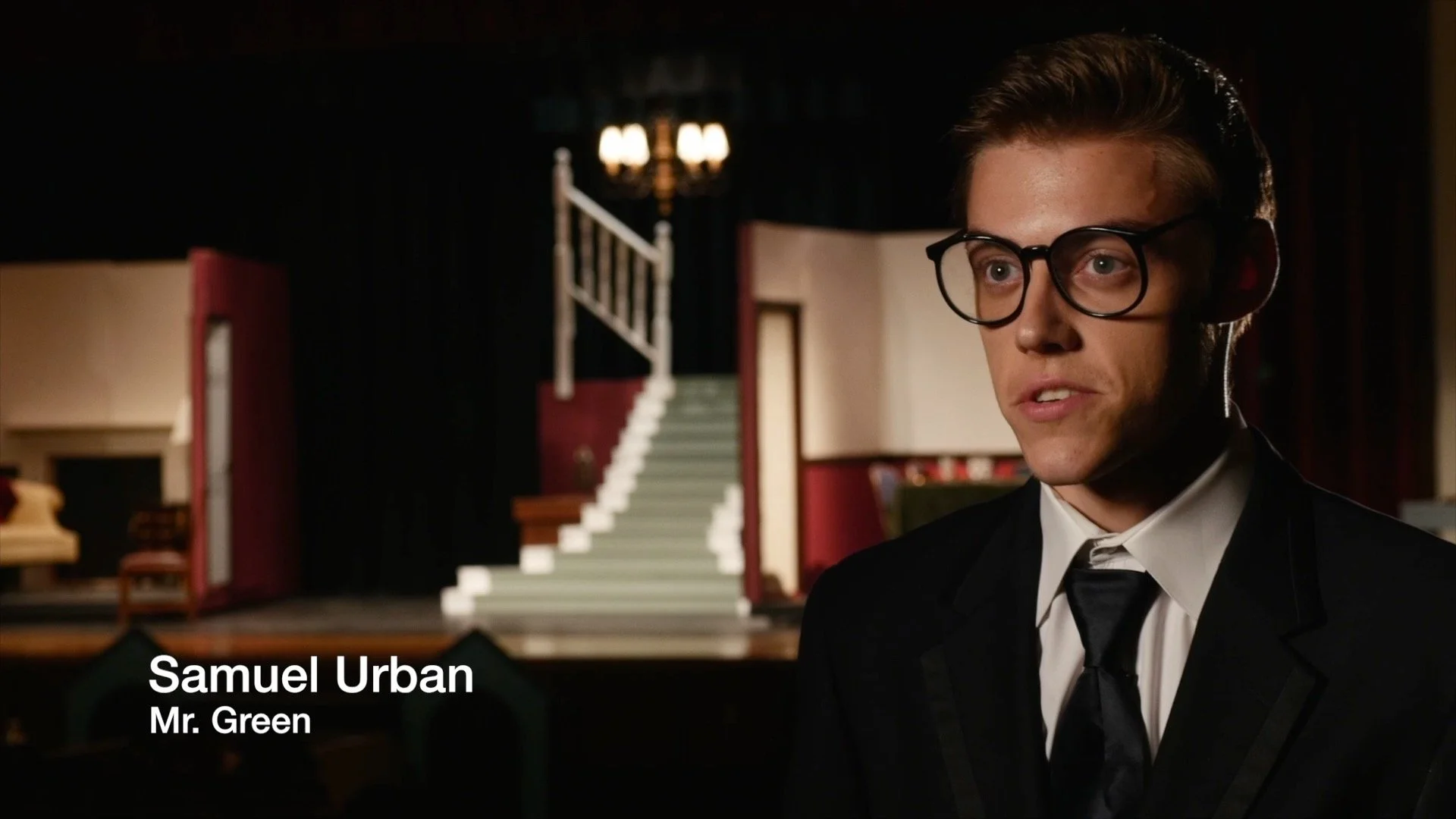
Professional interview lighting and theatrical scenery create a cinematic setting for Samuel Urban, portraying Mr. Green in Sheehan High School's Clue.
For Sheehan High School's production of Clue, we created a theatrical promotional film featuring interviews with cast members, including Samuel Urban as Mr. Green and Aubreyanna Murray as Mrs. White. Rather than placing the performers against a conventional interview backdrop, we photographed them within the theater, using controlled lighting to bring dimension to their faces while retaining the stage environment behind them. These conversations were combined with scenes from the production, introducing the personalities of the actors alongside the characters they portrayed. The result offered an opportunity to communicate both the humor and mystery of the play and the enthusiasm of the students involved in creating it.
A cinematic promotional film for Sheehan High School's production of Clue, combining professionally lit cast interviews with scenes from the stage. Through thoughtful lighting, composition, and editing, the film introduces the personalities behind the characters while capturing the humor, mystery, and theatrical energy of the production.
Theatrical Promotional Photography and Cast Portraits
Photography can play an equally important role in introducing a theatrical production. A thoughtfully directed cast portrait, promotional image, or series of theatrical photographs can provide organizations with visual material for websites, social media, press announcements, posters, and other promotional communications. Unlike photographs captured during a performance, posed theatrical imagery allows for greater control over composition, lighting, and the arrangement of performers within the environment. The objective is to create a photograph that feels connected to the production rather than simply documenting the people who appear in it.
For Clue, we also created a deliberately composed promotional portrait of the cast on the theatrical set. The photograph brought the performers together within the visual world of the play, using their costumes, expressions, and relationships to create a single image that introduced the production. This type of photography draws on our extensive experience in portraiture and creative direction, where the smallest decisions about positioning, lighting, and expression can influence the character of the finished photograph. When developed alongside a promotional film, theatrical photography can help create a cohesive visual identity for a production across multiple forms of communication.
The same attention to timing, atmosphere, and expression informs our photography of live musical performances, where stage lighting and the energy of the performers become essential parts of the story.
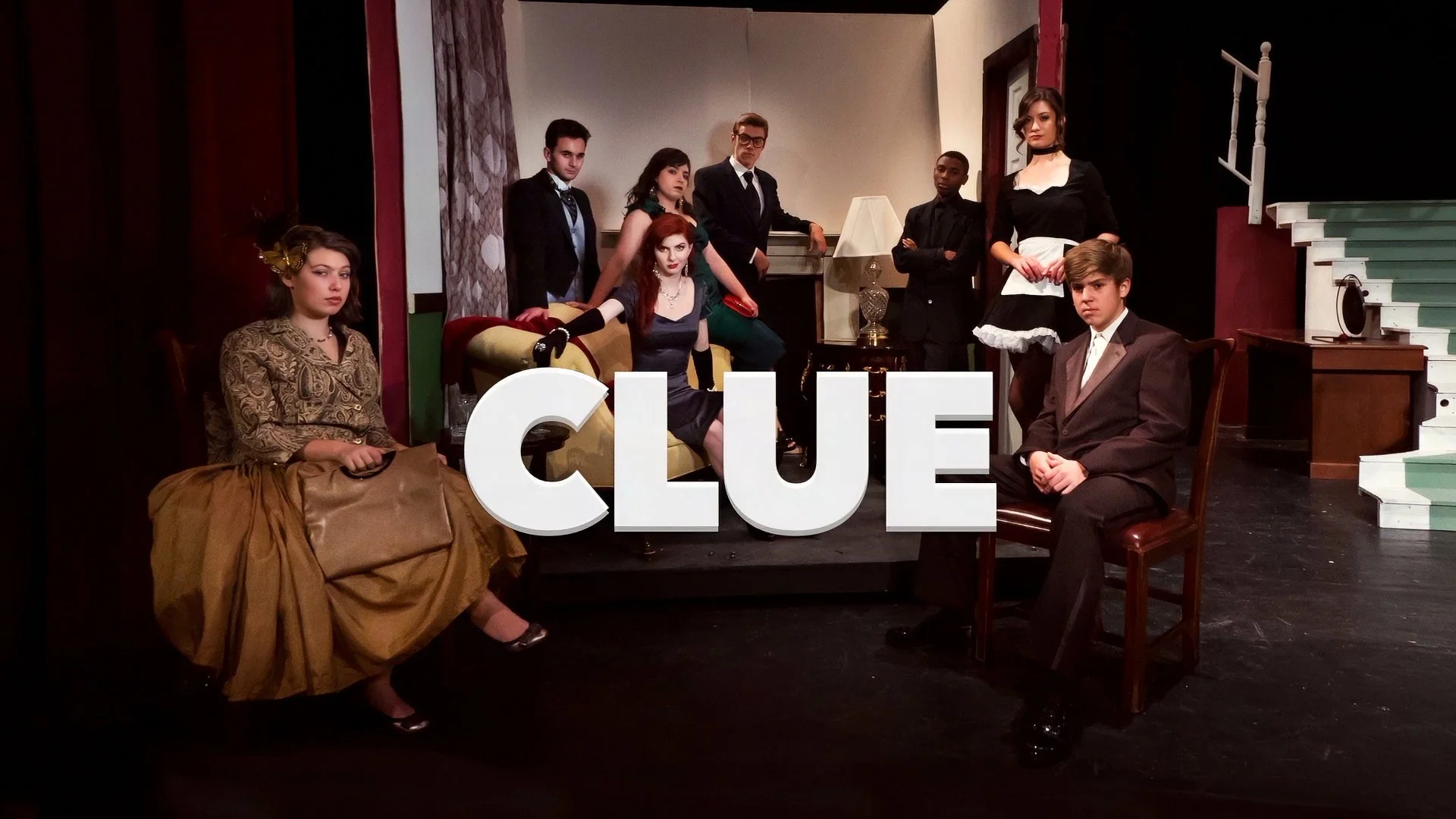
A deliberately composed theatrical cast portrait for Clue, combining professional photography, character, and creative direction to introduce the production.
The Great Gatsby: Cinematic Interviews and Theatrical Storytelling
Sheehan High School's production of The Great Gatsby offered an opportunity to develop a promotional film with a different visual atmosphere. Period costumes, dramatic relationships, and carefully designed theatrical environments created a distinctive setting for both the interviews and performance footage. We photographed actors within the theater using professional lighting to complement the stage environment, then combined those conversations with selected scenes from the production. The goal was to create a film that introduced the performers while reflecting the romance, tension, and visual character of the theatrical work.
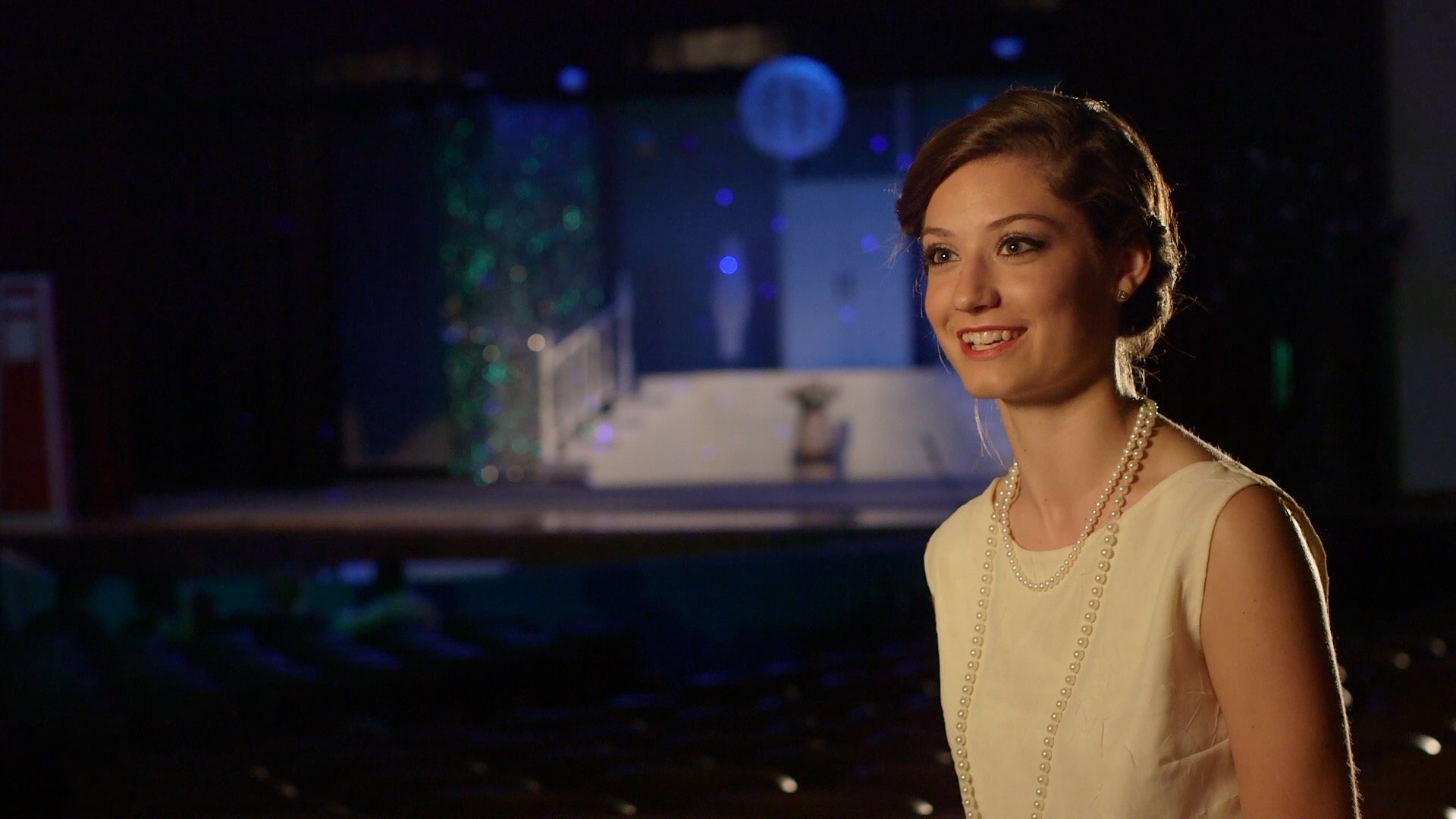
Cinematic actor interviews filmed within the theatrical environment for Sheehan High School's production of The Great Gatsby.
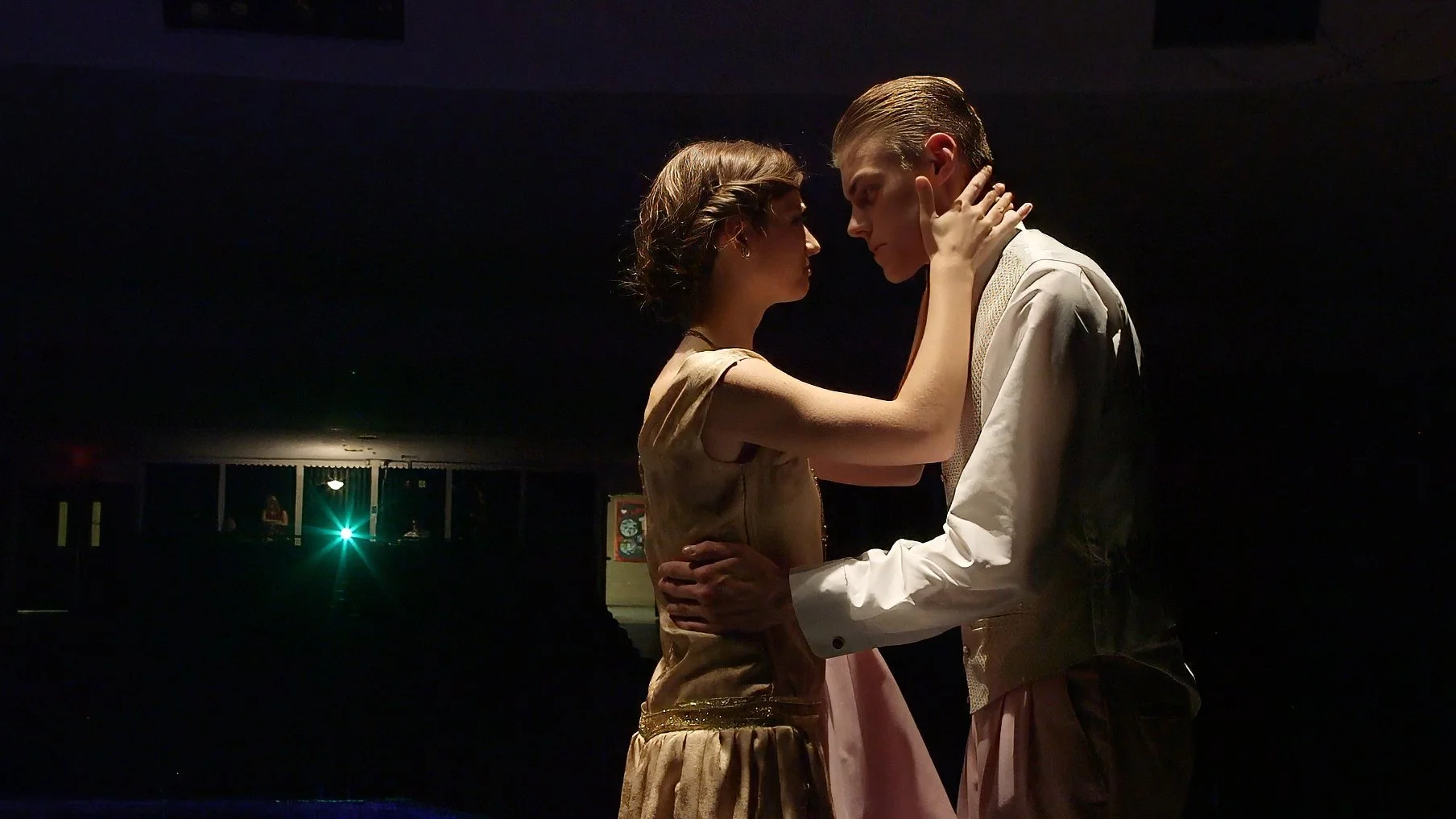
Dramatic stage lighting and expressive performances from The Great Gatsby, captured for the theatrical promotional film.
An effective promotional edit depends on more than selecting the most elaborate moments from a performance. Sometimes a quiet exchange between characters communicates the emotional direction of a story more effectively than a large ensemble scene. Other moments benefit from the energy of music, movement, and dramatic theatrical lighting. By considering the rhythm and progression of the finished film, we can create a short visual introduction that communicates the spirit of the production while encouraging audiences to experience the complete performance for themselves.
A cinematic promotional film for Sheehan High School's production of The Great Gatsby, combining professionally lit actor interviews with dramatic scenes from the stage. Period costumes, expressive performances, and atmospheric theatrical lighting bring the world of F. Scott Fitzgerald's classic story to life, while thoughtful cinematography and editing introduce the performers and capture the romance, intrigue, and emotion of the production.
Les Misérables: Capturing the Scale of a Musical Production
Large theatrical productions introduce additional considerations, particularly when the stage is filled with performers, music, and simultaneous action. Maloney High School's production of Les Misérables brought together dramatic acting, elaborate costumes, ensemble performances, and the emotional intensity associated with one of the world's best-known musicals. Capturing a production of this scale requires an awareness of both the individual performances and the larger theatrical composition. An intimate exchange may call for attention to a single performer, while a powerful ensemble sequence may depend on preserving the relationships between multiple actors across the entire stage.
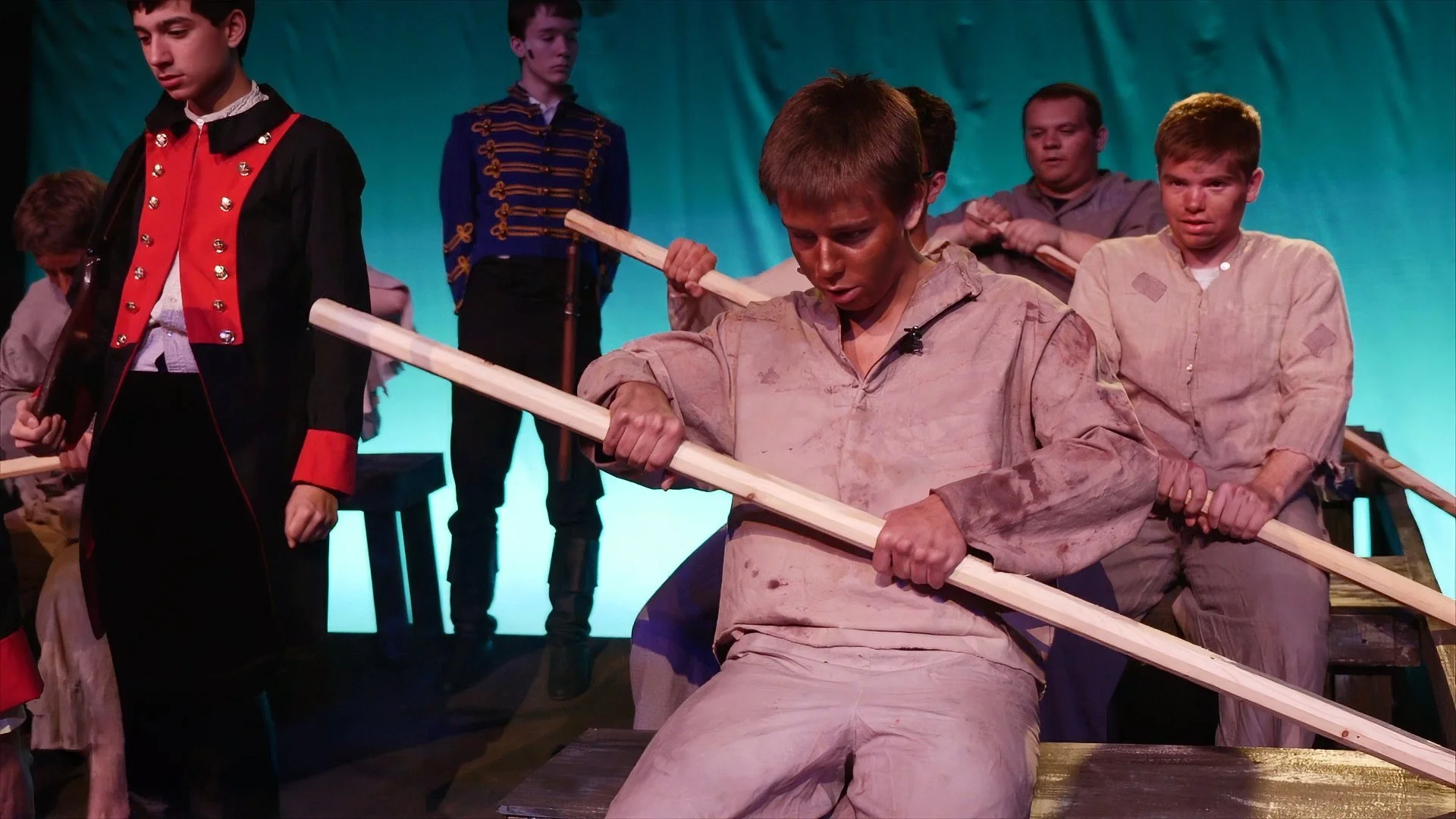
Dramatic theatrical storytelling from Maloney High School's Les Misérables, captured through professional performance cinematography.
For the promotional film, we selected moments that reflected the scale, emotion, and collective energy of the production. The resulting imagery also became a lasting record of the students and creative team who contributed to the performance. While theatrical films are often commissioned with an immediate promotional purpose, they can take on additional value over time as performers graduate, organizations evolve, and productions become part of a school's or theater company's history. Professional photography and filmmaking help preserve not only the appearance of a production but also the work and collaboration that made it possible.
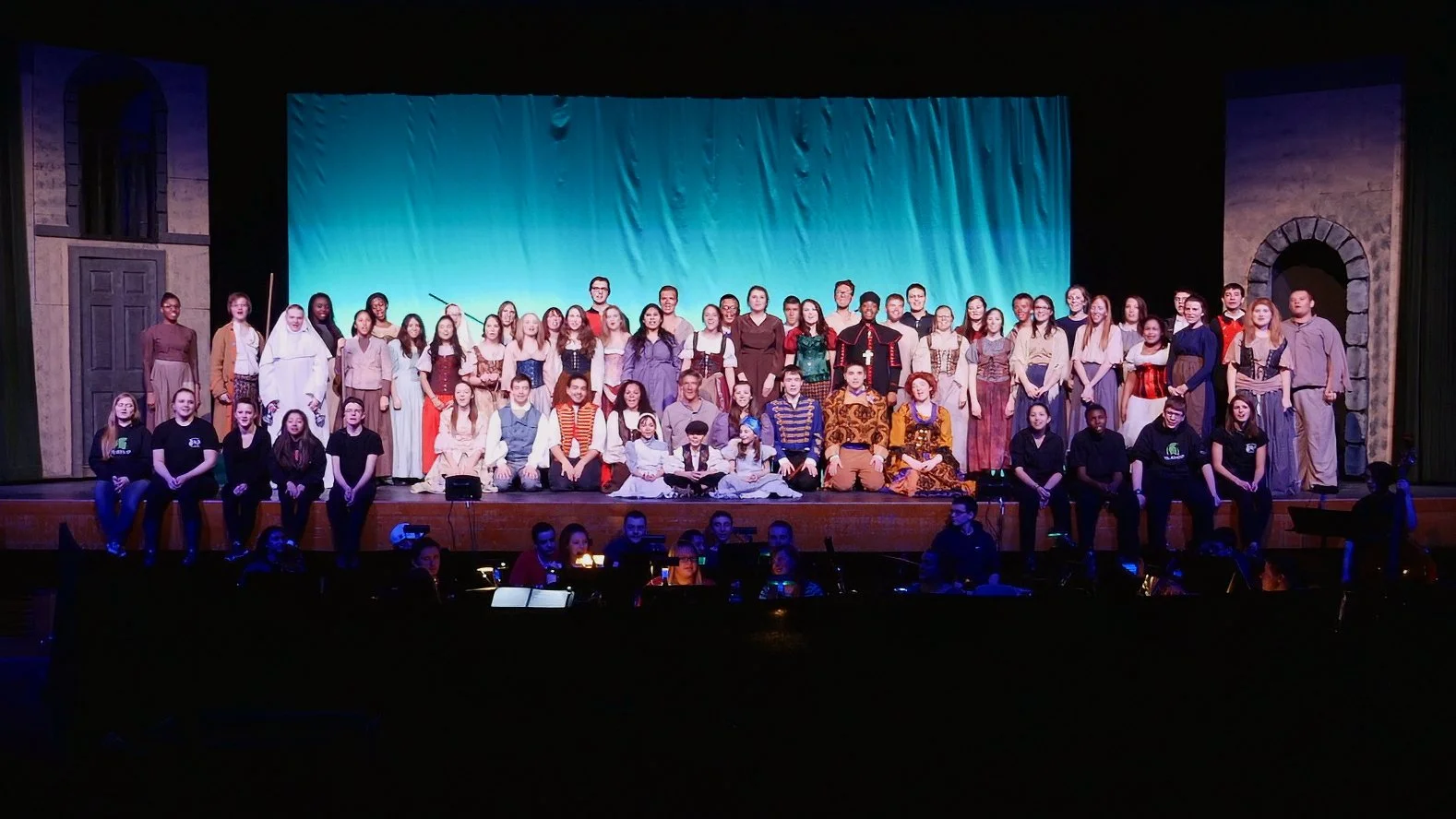
The cast and production participants of Maloney High School's Les Misérables, showcasing the collaborative scale of a major musical production.
A cinematic promotional film for Maloney High School's production of Les Misérables, capturing the emotion, dramatic performances, and powerful ensemble scenes of this celebrated musical. Through carefully selected theatrical moments, expressive cinematography, and thoughtful editing, the film showcases the dedication and talent of the student performers while conveying the scale, intensity, and storytelling of the live production.
Original Theater Productions and Creative Workshops
Not every theatrical project is a familiar musical or an established play. Original productions and workshops may require a more documentary-oriented approach, particularly when the work is still being developed. Masks and The Monster, directed by Joni Weisfeld, provided an opportunity to film an original theatrical workshop characterized by expressive physical movement, minimal staging, dramatic lighting, and intimate interactions between performers. The visual environment placed particular emphasis on gesture, emotion, and the evolving relationships within the performance.
Our film combined material from the workshop with interviews, creating a record of the work while offering insight into the creative process behind it. For directors, playwrights, and performing arts organizations developing original material, this type of filmmaking can serve several purposes. It can introduce a project to potential audiences and collaborators, document an important stage in its development, and preserve the contributions of the artists involved. The approach is shaped by the production itself, with an emphasis on observing the work carefully and allowing its distinctive character to guide the visual storytelling.
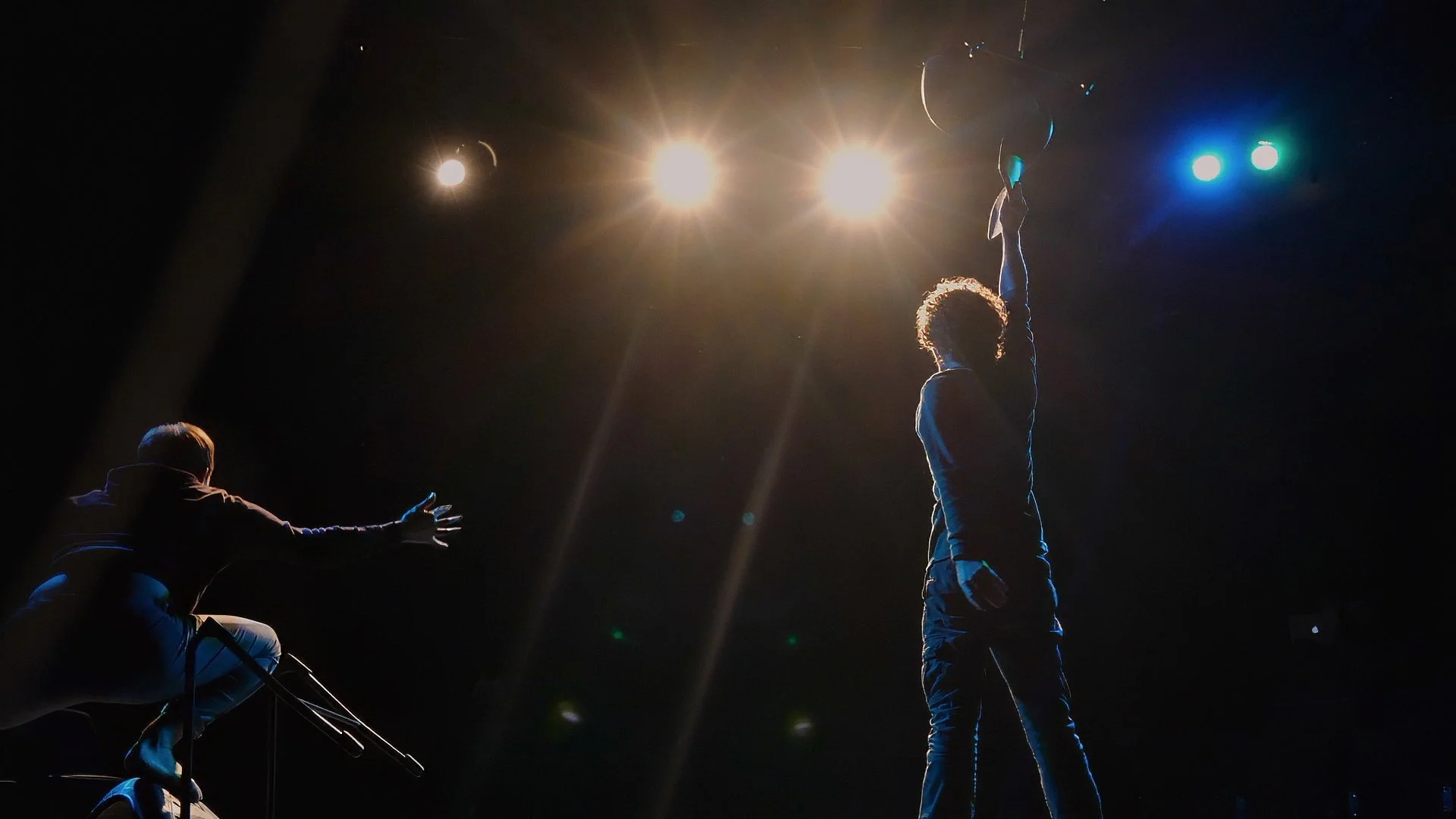
Minimal staging and expressive movement create a distinctive visual environment for documenting original theatrical work.
A cinematic promotional film documenting Masks and The Monster, an original theatrical workshop directed by Joni Weisfeld. Combining intimate performer interviews with expressive movement, dramatic lighting, and scenes from the stage, the film offers a glimpse into the creative development of an original production. Minimal staging and emotionally charged performances reveal the power of physical storytelling while celebrating the imagination and collaborative process behind the work.
Dance Performance Filming and Archival Videography
Dance presents a different set of challenges from conventional theatrical filming. Movement, choreography, spacing, timing, and lighting are central to the performance, and the camera must preserve the relationships between dancers as they move through the stage environment. A beautifully composed close-up may capture an expressive gesture, but a wider view may be essential to understanding the choreography. Professional dance videography requires the ability to anticipate movement, respond to changing theatrical lighting, and recognize when the composition of the entire stage is more important than an individual performer.
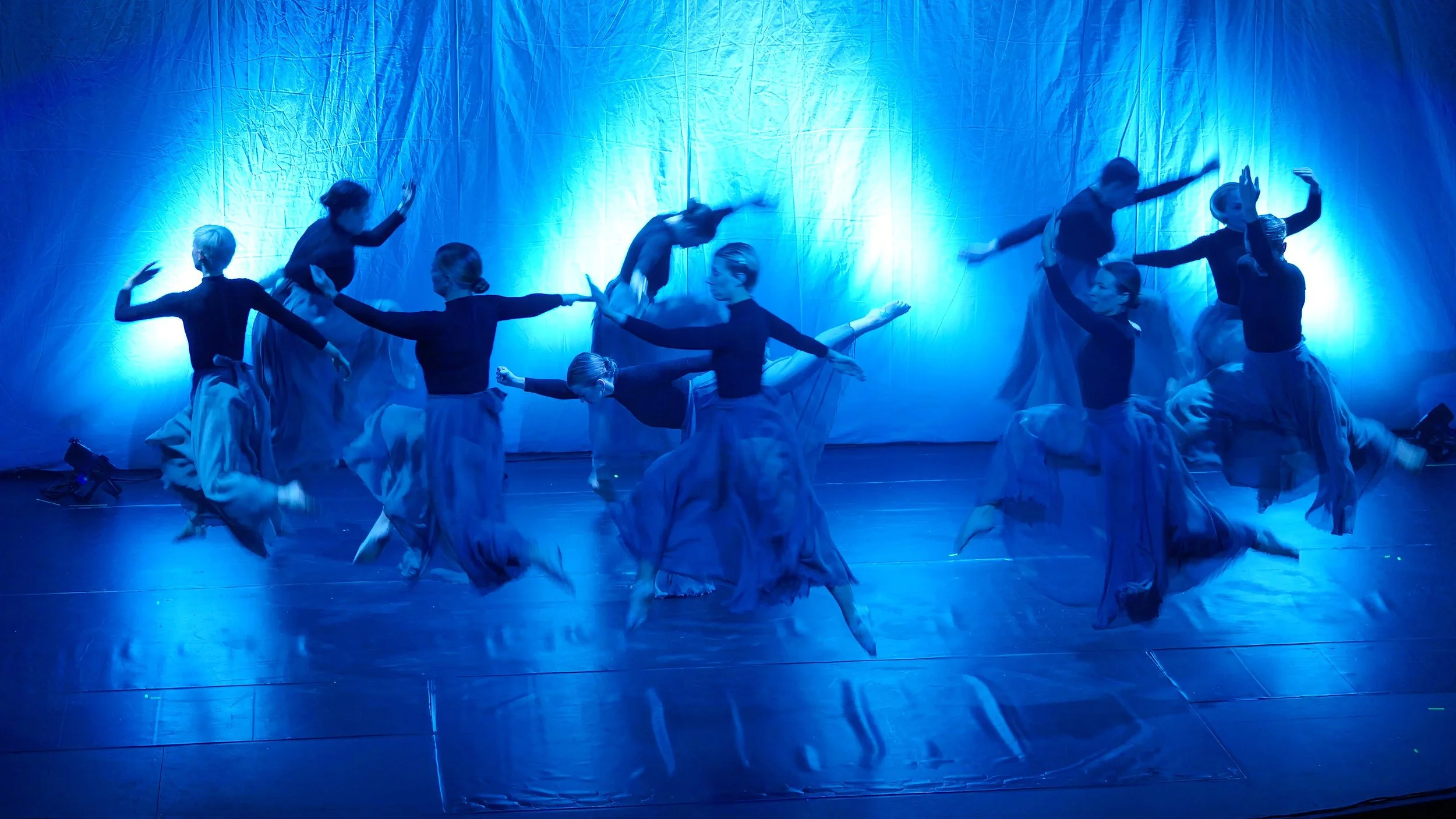
For Tybee Ballet Theatre's From the Minds of Others, performed at the Tybee Post Theater on Tybee Island, we filmed the complete production and preserved its individual chapters as archival recordings. We also created a separate highlight film featuring selected moments from the performance. The production included contemporary dance beneath saturated blue and red theatrical lighting, choreography involving chairs, and a distinctive sequence that brought together dance, live saxophone, and painting. Each section presented its own visual environment, requiring careful consideration of exposure, color, movement, and framing while respecting the lighting and staging developed for the live audience.
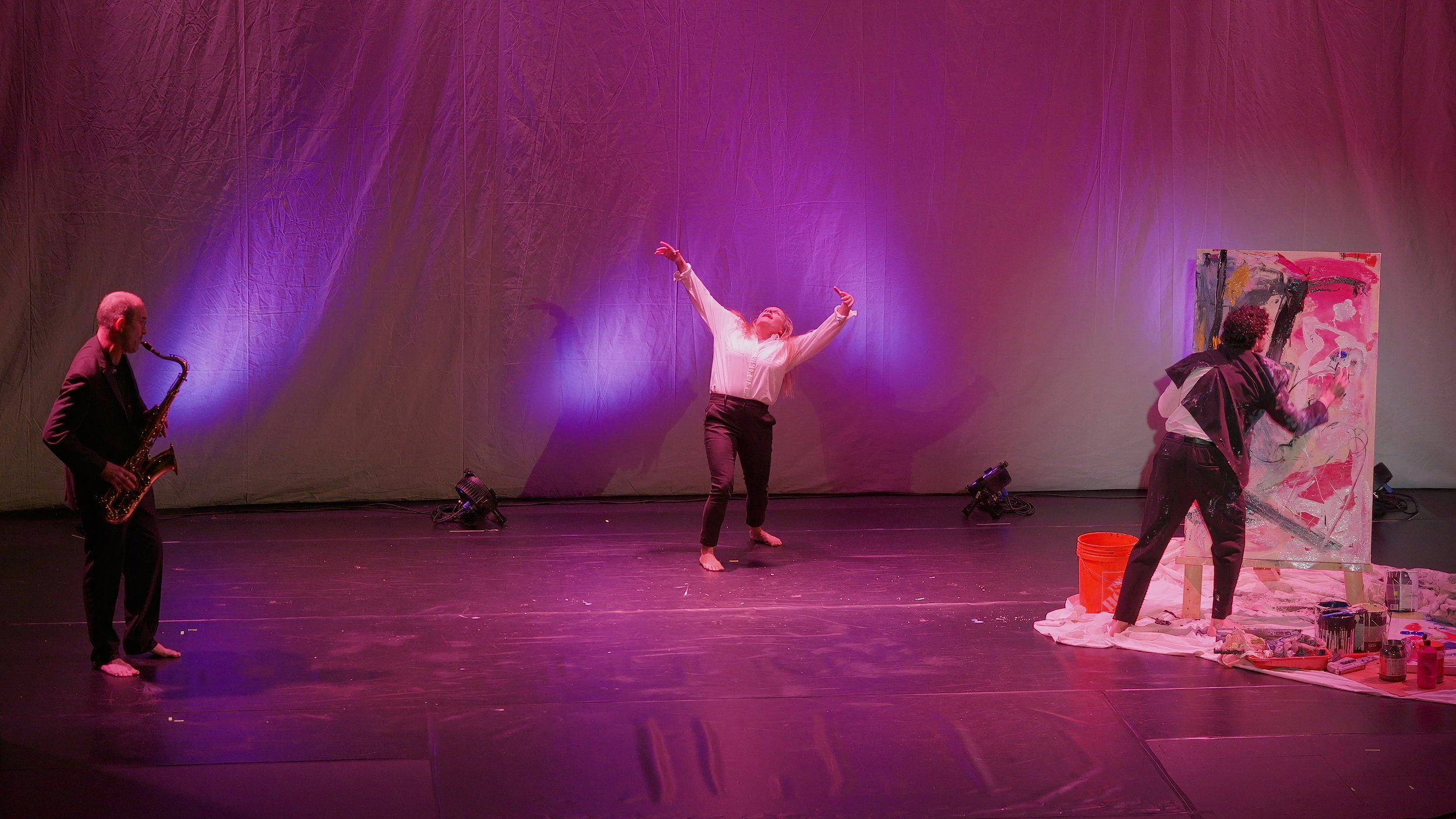
Dance, live saxophone, and painting come together during Tybee Ballet Theatre's From the Minds of Others at the Tybee Post Theater.
The archival recordings and highlight film served different purposes. The complete performance recordings preserved the sequence, choreography, and continuity of the original production, providing the organization with a lasting visual record of the work. The shorter highlight film offered a more condensed interpretation, bringing together selected moments to communicate the energy, variety, and artistic character of the performance. Dance companies, schools, and performing arts organizations may benefit from both approaches, particularly when a production represents a significant investment in original choreography, music, design, and rehearsal.
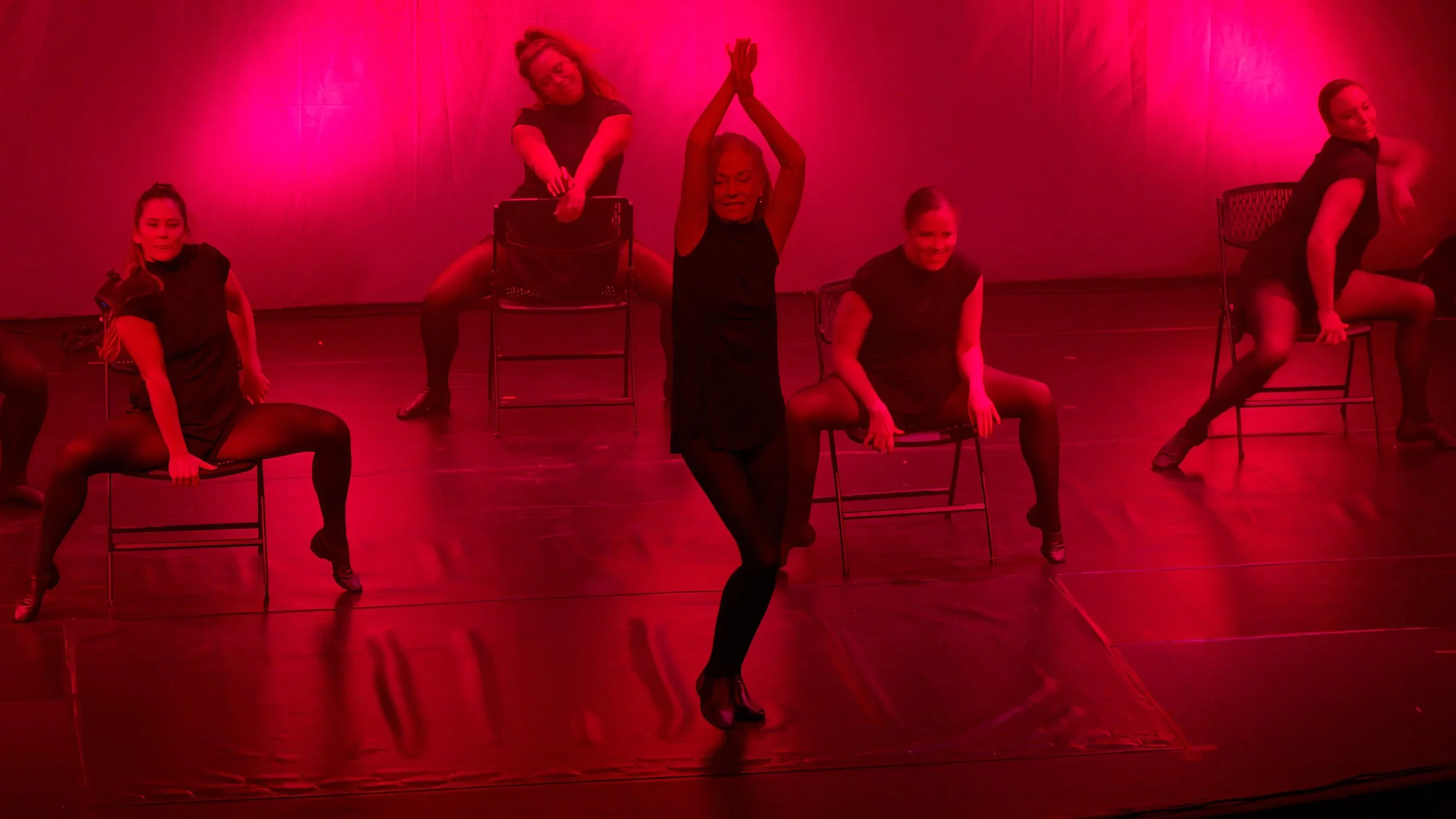
Contemporary choreography and dramatic theatrical lighting captured during From the Minds of Others, presented by Tybee Ballet Theatre.
A cinematic dance highlight film featuring From the Minds of Others, presented by Tybee Ballet Theatre at the Tybee Post Theater on Tybee Island, Georgia. Through expressive contemporary choreography, dramatic theatrical lighting, live music, and painting, the film captures the creativity and visual artistry of this original performance. Maring Visuals also documented the complete production in individual archival chapters, preserving the choreography and artistic vision while creating a separate highlight film that celebrates the energy, movement, and imagination of the live experience.
Two Different Goals: Promoting a Production and Preserving Its History
One of the most important decisions in planning theatrical photography or filmmaking is determining what the finished material needs to accomplish. A promotional film is designed to attract attention, introduce a production, and encourage audiences to become interested in the performance. It may include cast interviews, selected scenes, creative editing, and carefully considered music. An archival recording has a different responsibility. Its purpose is to preserve the original work, maintaining the sequence of scenes, choreography, and staging so that the performance can be revisited as a complete experience. Photography introduces another set of possibilities, from directed promotional portraits to production imagery that documents the visual design and emotional character of the performance.
These approaches can complement one another, but they should not be treated as interchangeable. A short highlight film cannot replace a complete archival recording when an organization needs to preserve the choreography of an entire production. Likewise, a straightforward recording of a full performance may not provide the most effective introduction for someone unfamiliar with the work. By identifying the intended audience and purpose at the beginning of a project, we can recommend a production approach that makes the most of the available time, resources, and creative opportunities.
Professional Production Within the Theater Environment
Theater and dance filming require an understanding of the practical realities of live performance. Stage lighting can change rapidly, performers move through environments with significant variations in brightness, and the production may depend on carefully timed sound and visual cues. Interviews introduce additional requirements, including professional audio recording, controlled lighting, and a comfortable environment in which performers can speak naturally. For archival coverage, camera positioning and coordination with the theater are particularly important, allowing the performance to be recorded without interfering with the experience of the audience or the intentions of the creative team.
Maring Visuals brings experience in professional photography, cinematic filmmaking, lighting, audio, interviewing, and postproduction to these assignments. We develop the coverage around the needs of each production rather than applying the same approach to every performance. A student theater promotional film, an original theatrical workshop, and a complete contemporary dance recording may all take place on a stage, but each deserves a production plan that reflects its particular creative and practical requirements.
Photography and Films That Extend the Life of a Performance
Theater and dance are temporary by nature. Even productions performed over several nights are never experienced in exactly the same way twice. Professional photography and filmmaking cannot replace the excitement of attending a live performance, but they can help organizations share that experience with new audiences and preserve the work of the people who created it. A promotional film may encourage someone to attend opening night. A theatrical portrait may become the defining image of a production. An archival recording may allow dancers, directors, and performers to revisit work that would otherwise exist only in memory.
For theater companies, performing arts schools, dance organizations, and directors planning upcoming productions, Maring Visuals offers a collaborative approach to theatrical photography, promotional filmmaking, cast interviews, and performance documentation. Our goal is to create visual work that reflects the imagination and effort already invested in the stage, while giving organizations meaningful photographs and films they can continue to use beyond the final performance.
Planning a theatrical production or dance performance? Contact Maring Visuals to discuss promotional photography, theatrical films, interviews, highlight videos, or archival recording.
For a more personal exploration of the creative decisions behind these projects, read The Art of Filming Theater and Dance in the Charles Maring journal.