
Church History & Anniversary Documentary Films
Preserving the People, Faith, and Stories That Built Your Church
Every church has a story worth preserving. Behind the buildings, ministries, and milestones are generations of people whose faith, sacrifice, and dedication helped shape a community. Their stories live in historical photographs, aging recordings, personal memories, and the experiences of those who have spent their lives serving a congregation. Yet with every passing year, some of those memories become more difficult to recover, and the opportunity to preserve them grows more important.
At Maring Visuals, we create cinematic church history and anniversary documentary films that bring these stories together in a meaningful and enduring way. Through thoughtfully directed interviews, historical research, archival photographs, professional cinematography, and careful editing, we transform decades of memories into a film that can be shared with today's congregation and preserved for generations to come. Based in Savannah, Georgia and the Northeast, we are available for documentary productions throughout the United States.
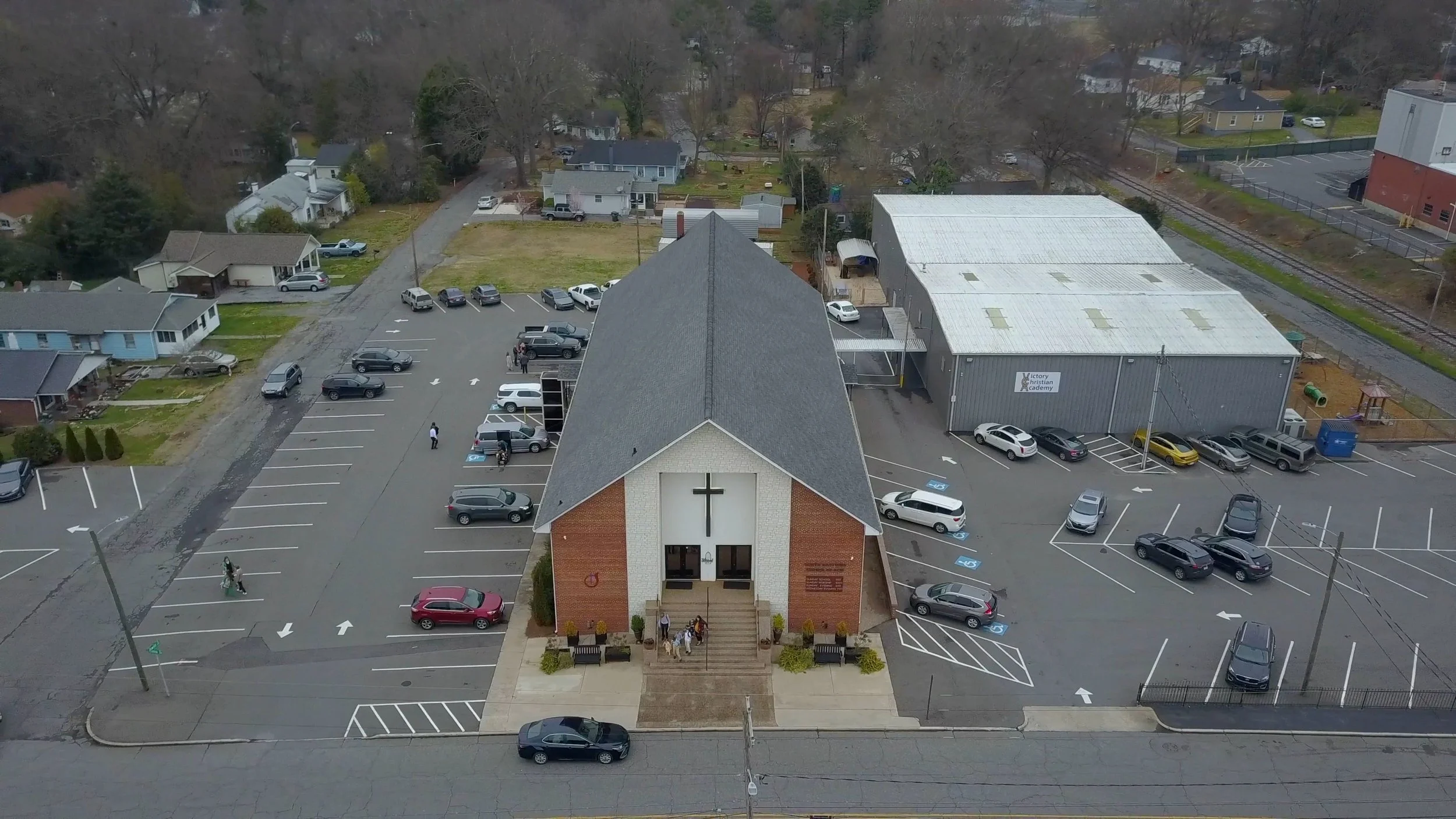
South Gastonia Church of God in Gastonia, North Carolina, the subject of a documentary celebrating 90 years of faith, community, and shared history.
More Than an Anniversary Film. A Legacy for Future Generations.
A church anniversary is an opportunity to celebrate the past, but it can also become an important moment to preserve it. A documentary allows longtime members to share their experiences in their own words, connects younger generations with the people who helped establish their community, and creates a historical record that extends far beyond a single celebration. Unlike a slideshow or a collection of recorded speeches, a thoughtfully directed documentary brings personal memories, historical materials, and contemporary cinematography together to tell a cohesive story.
These films can become lasting resources for congregations, families, church archives, and future leadership. They may be premiered during anniversary celebrations, shared online, incorporated into historical exhibits, or revisited years later by people who never had the opportunity to meet the individuals featured. The value of a documentary is not simply what it communicates today, but what it preserves for tomorrow.
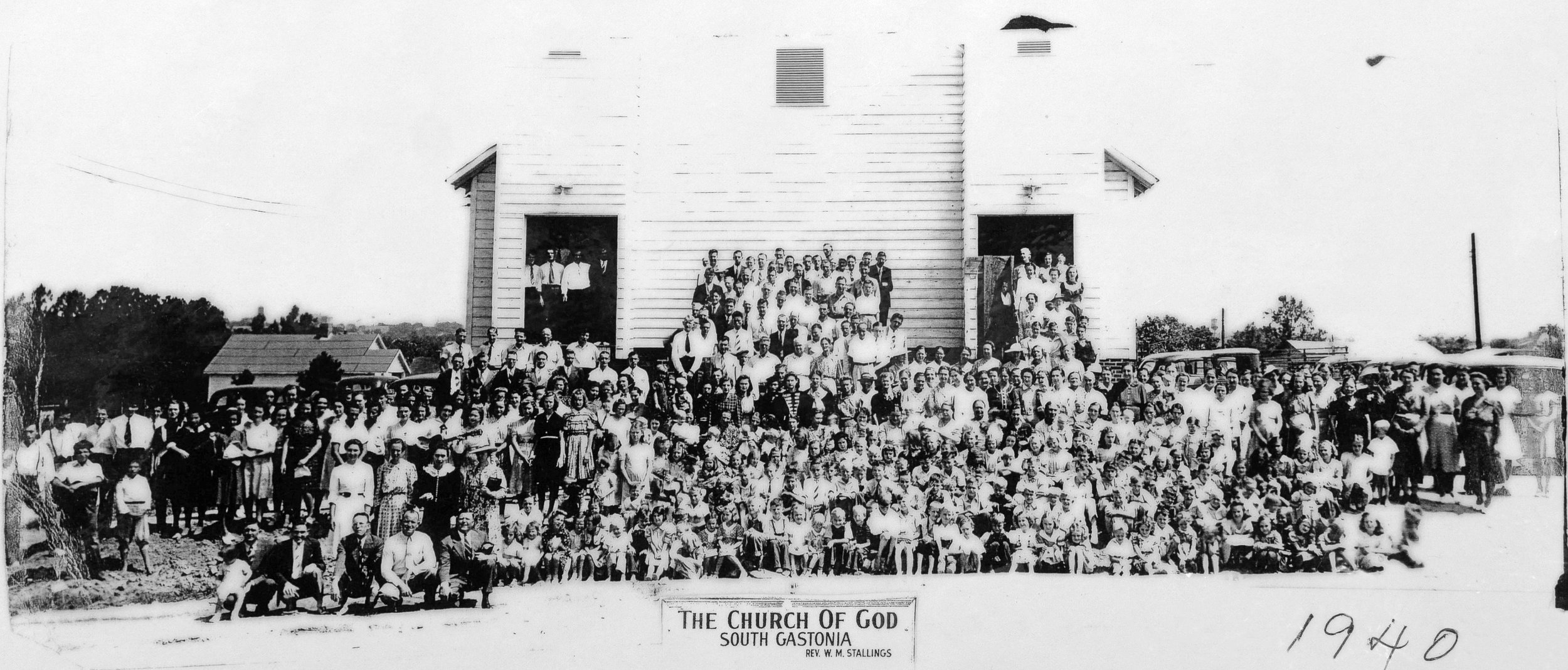
The South Gastonia congregation in 1940. Photographs like this preserve a visual record of the generations who shaped a church's history.
A Church Documentary: 90 Years of South Gastonia Church of God
When South Gastonia Church of God approached its 90th anniversary, Maring was commissioned to produce a documentary exploring the congregation's history from its founding in 1933. The project brought together decades of archival photographs and recordings, contemporary aerial cinematography, interviews with church leaders and longtime members, and original anniversary graphics. The objective was to create something more meaningful than a chronological presentation of events: a film that would help the congregation understand and appreciate the people whose lives contributed to its remarkable history.
Among the individuals interviewed was Arnold Wooten, whose 62 years of membership offered a personal connection to generations of church life. Conversations with Pastor Adrian Franklin, Pastor Gilley, and Minister of Music Keith Johnson contributed additional perspectives on the congregation's leadership, worship, and community. Together with historical photographs and archival recordings, these interviews helped form a narrative connecting the church's earliest years with the congregation it serves today.
For a closer look behind the production, filmmaker Charles Maring shares the creative decisions, technical challenges, and personal approach to storytelling in Preserving 90 Years of Faith: The Art of Church History Documentary Filmmaking.
Documentary Interviews That Preserve Personal Memories
The most meaningful church documentaries begin with people. Historical records can tell us when a congregation was founded, who served as pastor, or when a building was constructed, but personal interviews reveal what those experiences meant to the individuals who lived them. Our documentary process involves researching the organization's history, preparing thoughtful questions, identifying meaningful perspectives, and directing conversations that uncover more than a sequence of facts.
An experienced documentary director understands that the most revealing answers do not always come from the first question. Sometimes a memory deserves to be explored from another perspective, or a subject needs time to reflect before sharing something more personal. These moments require patience, careful listening, and the ability to recognize when an unexpected thought may become an important part of the story. Our goal is to create a comfortable environment in which people can speak naturally, allowing their memories and personalities to become the emotional foundation of the finished film.
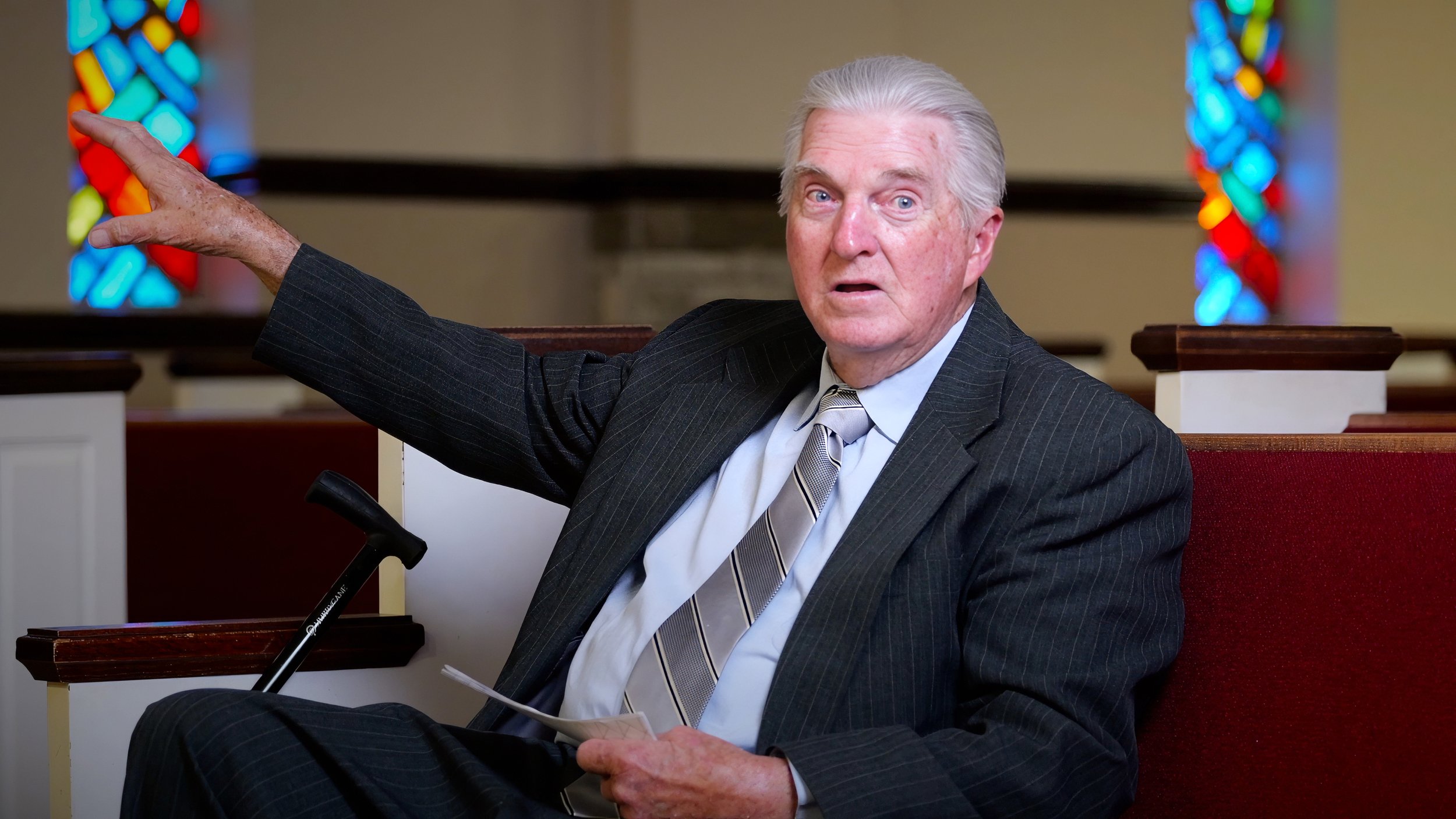
Arnold Wooten shares memories from 62 years of church membership, helping preserve firsthand experiences for future generations.
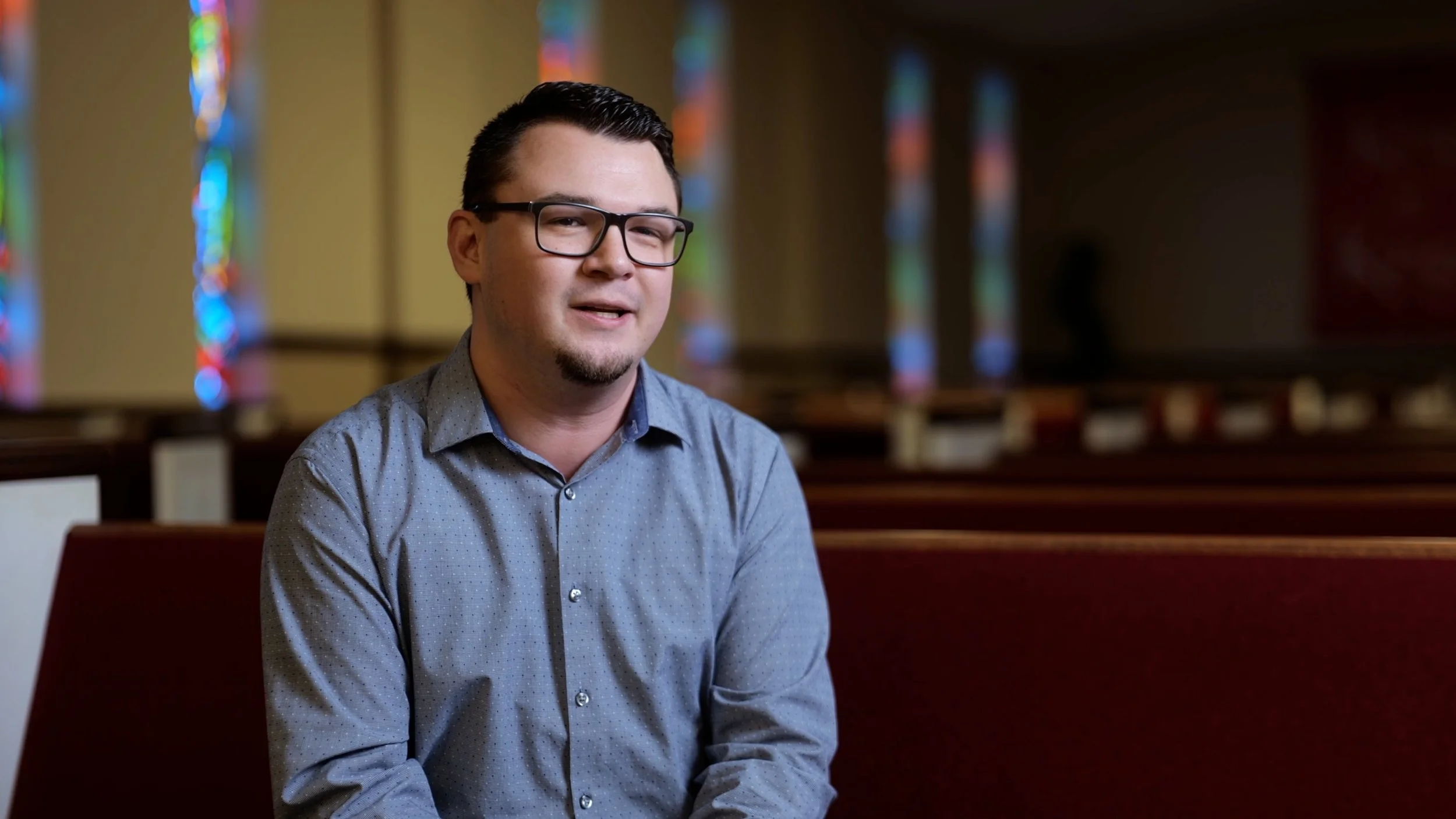
Pastor Adrian Franklin discusses the church's history and continuing ministry during the documentary production.
Cinematic Lighting, Professional Sound, and Thoughtful Production
Church sanctuaries often provide beautiful architectural settings, but their stained-glass windows, mixed lighting, and darker interiors can make professional interviews technically challenging. Maring draws upon decades of experience in wedding photography and portraiture to create carefully balanced cinematic lighting that preserves the atmosphere of the sanctuary while rendering natural skin tones and flattering portraits. Rather than allowing bright windows to become distracting backgrounds, controlled lighting can reveal their color and detail while keeping the subject beautifully illuminated.
Equally important is the reliability of the audio. During the South Gastonia documentary, interviews were recorded using an overhead boom microphone and a separate lavalier microphone as a backup. This approach reflects a fundamental responsibility in documentary production: some conversations cannot easily be repeated. Longtime members may be sharing memories that have never been formally recorded, and a technical failure could mean losing something irreplaceable. Professional production involves not only creating beautiful images and clear dialogue, but also protecting the moments entrusted to the filmmaker.
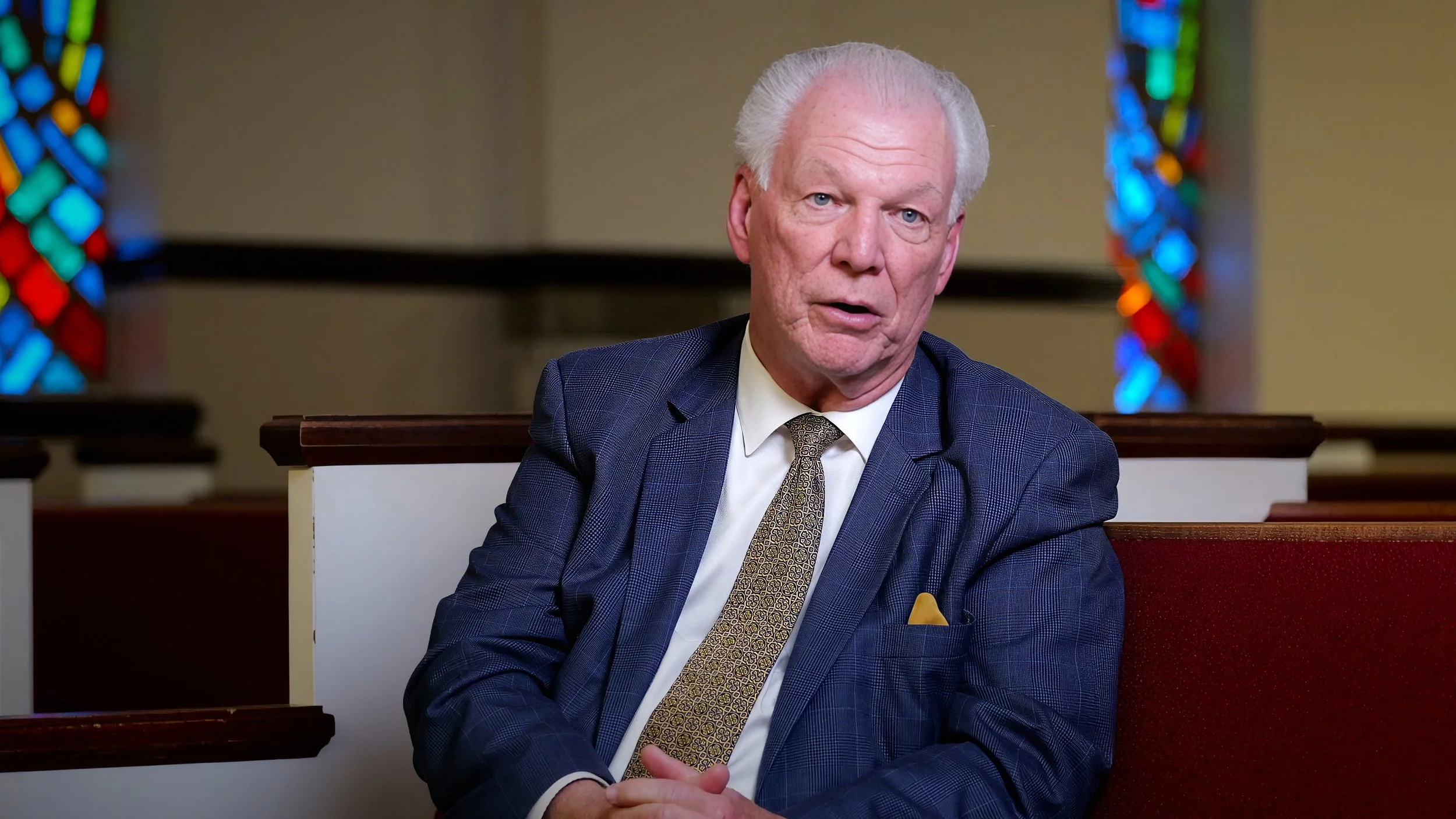
Controlled cinematic lighting preserves the color and detail of the stained glass while creating natural, beautifully illuminated portraits.
Archival Photography, Restoration, and Historical Preservation
Many churches possess remarkable historical collections that have never been professionally prepared for contemporary presentation. Photographs may be stored in albums or boxes, while older recordings may exist on formats that are increasingly difficult to access. Bringing these materials into a documentary can require careful digitization, image restoration, archival organization, and technical preparation. Aging photographs may need attention to fading, scratches, dust, or physical damage, while historical video recordings may require conversion and evaluation before they can be incorporated into a modern production.
This work can represent a substantial part of the documentary process, but it also offers an important benefit beyond the finished film. Properly prepared digital materials can help preserve a congregation's visual history for future use. Our approach respects the authenticity of original photographs and recordings while using thoughtful editing, composition, and subtle visual movement to connect those materials with contemporary interviews. The objective is not to make the past appear artificially modern, but to allow today's audiences to appreciate the people and moments those materials preserve.
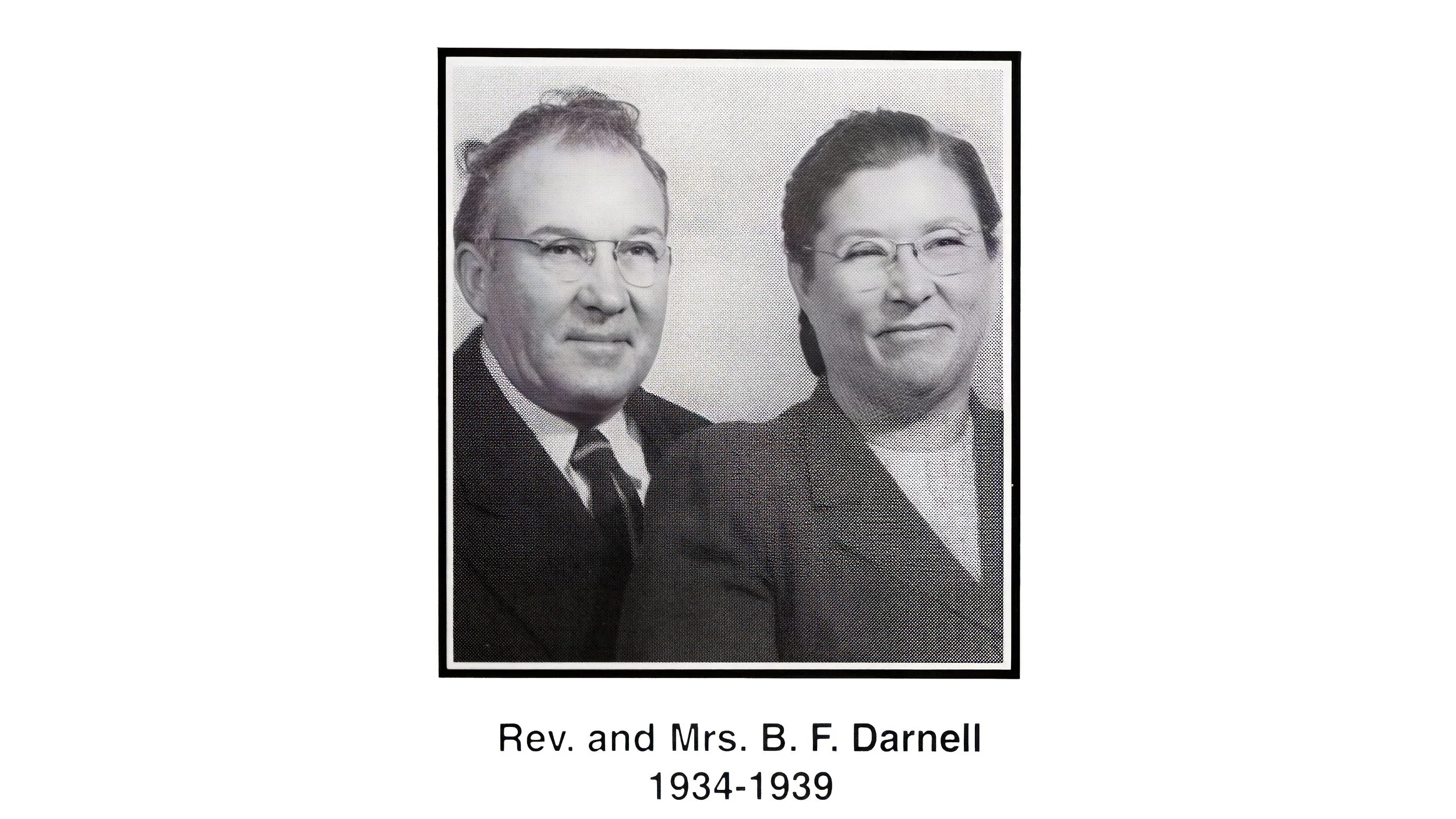
Rev. and Mrs. B. F. Darnell, 1934–1939. Historical photographs help document the people and leadership behind a congregation's earliest chapters.
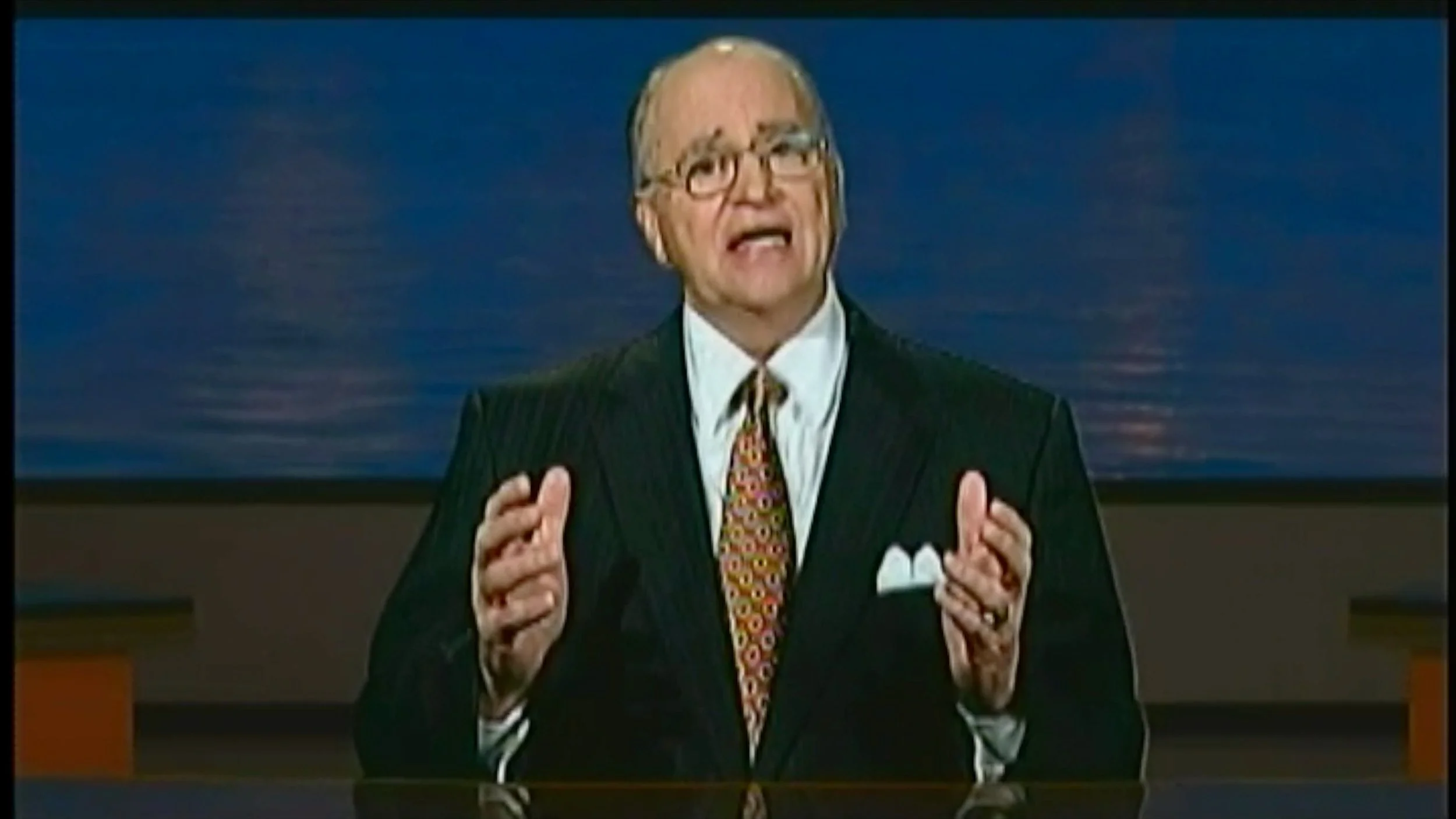
Historical recordings offer another connection to earlier generations, preserving voices and moments that photographs alone cannot capture.
Bringing Church History to Life Through Creative Storytelling
Historical documentary production sometimes requires visual solutions when original footage does not exist. For the South Gastonia film, an authentic historical portrait of a preacher served as the reference for an AI-assisted artistic reconstruction illustrating an early outdoor revival. This imagined scene helped communicate the atmosphere of a historical setting while remaining distinct from genuine archival photography. The reconstruction was not presented as photographic evidence of an actual event, but as a visual interpretation supporting the documentary narrative.
Creative storytelling also extends to graphic design, music, transitions, pacing, and the visual identity of the finished production. For South Gastonia's anniversary, Charles Maring designed a commemorative logo and animated film bumper, with the anniversary identity also appearing on T-shirts and memorabilia produced for the celebration. These elements helped connect the documentary with the larger milestone event, creating a cohesive presentation that honored the church's history while giving the celebration its own distinctive visual character.
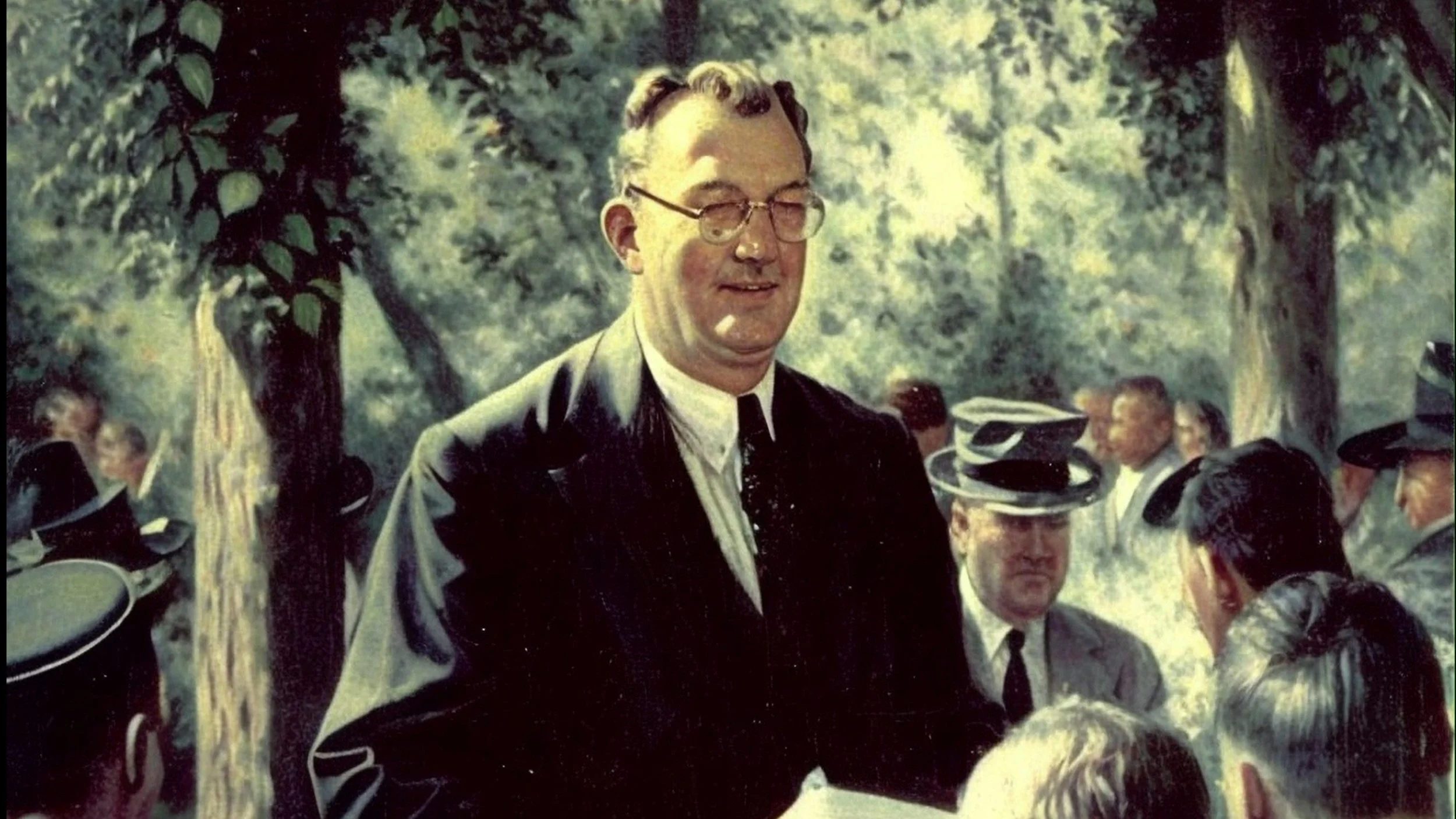
An artistic reconstruction illustrating an early outdoor revival. The scene was created using AI-assisted techniques and is not an original historical photograph.
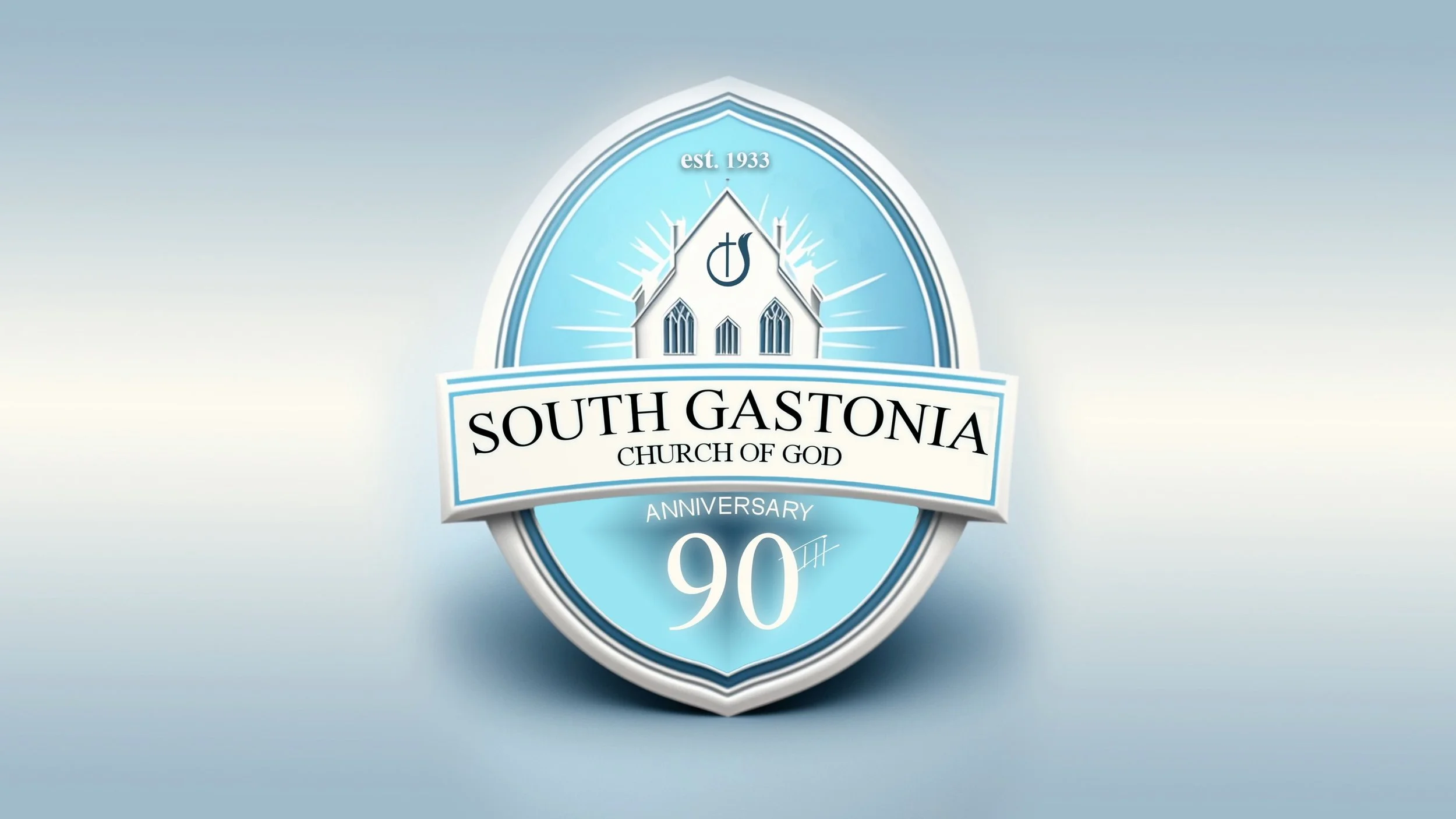
The 90th anniversary logo and animated video bumper were created for the documentary, with the design also appearing on commemorative T-shirts and anniversary memorabilia.
From Hours of Memories to One Meaningful Documentary
The final stage of documentary filmmaking is where research, interviews, archival materials, cinematography, and creative direction come together. Hours of recorded conversations and historical footage must be reviewed, organized, and shaped into a cohesive narrative. Some interviews may contain fascinating stories that ultimately do not belong in the finished film, while a brief personal recollection may become one of its most meaningful moments. The filmmaker's responsibility is to recognize those distinctions and make thoughtful editorial decisions that serve the larger story.
Our approach places particular importance on this process. We consider not only which historical events should be included, but how those events connect emotionally with the audience. Music, pacing, transitions, silence, and the relationship between images and spoken memories all contribute to the experience. The objective is not simply to include as much information as possible, but to create a film that people will want to watch, share, and return to for years to come.
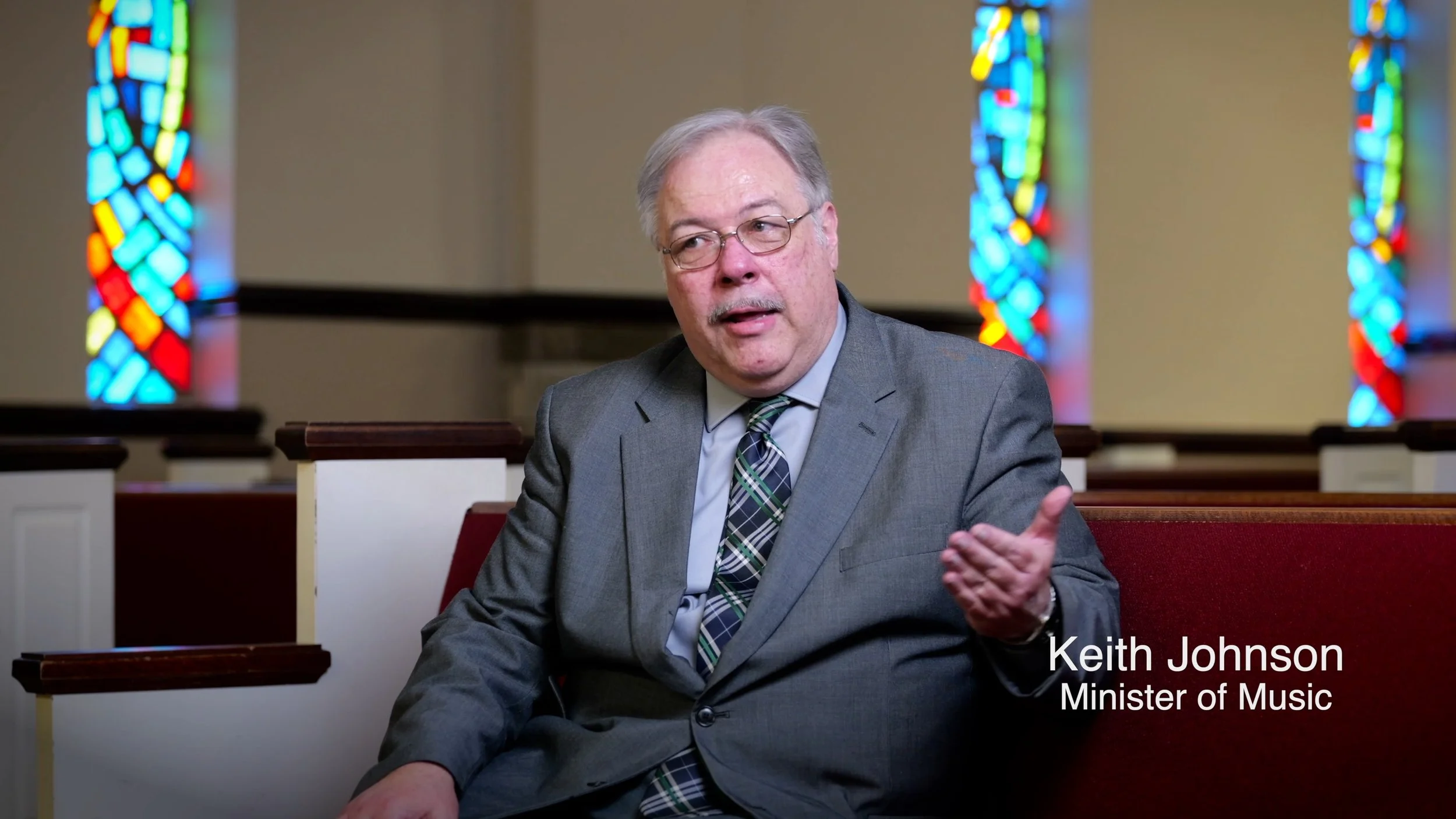
Keith Johnson, Minister of Music, was among the church leaders whose interviews helped connect the congregation's past and present.
Documentary Films for Churches, Ministries, and Denominations Nationwide
While anniversary celebrations are a natural occasion for producing a historical documentary, the opportunity extends well beyond a single milestone. Churches may wish to preserve their founding stories, document decades of ministry, recognize influential leaders, or record the memories of longtime members before those stories are lost. Denominations and faith-based organizations may have histories spanning multiple congregations, communities, and generations, requiring a broader documentary approach involving additional research, interviews, and locations.
Every organization has different historical materials, production needs, and storytelling goals. Some projects may focus on a concise film for an anniversary celebration, while others may involve a more extensive documentary exploring a century of institutional history. Maring Visuals develops each production around the story being told, with consideration for research, travel, filming, archival preparation, postproduction, and the intended audience. We welcome documentary projects throughout the United States.
Frequently Asked Questions About Church Documentary Films
-
A church history documentary is a professionally produced film that preserves the people, events, and experiences that shaped a congregation. Unlike a traditional anniversary slideshow, a documentary combines personal interviews, historical photographs, archival footage, and contemporary cinematography to create a meaningful narrative that can be shared with current members and future generations.
-
We recommend beginning the conversation several months before your anniversary celebration, particularly when a project involves historical research, multiple interviews, and archival restoration. Larger documentaries may require additional preparation. Early planning provides time to identify important stories, gather historical materials, and develop a thoughtful production schedule.
-
Yes. Historical photographs, recorded sermons, home videos, and other archival materials can become important elements of a documentary. We can help digitize and prepare suitable materials for film production, including restoration and visual enhancements where appropriate. The extent of archival work depends on the condition, format, and quantity of the materials.
-
Yes. Maring Visuals provides church history and anniversary documentary filmmaking services throughout the United States, with a strong presence in the Northeast and Southeast. Our work includes the 90th anniversary documentary for South Gastonia Church of God in North Carolina. Whether documenting a single congregation or telling a larger story across multiple locations, we travel wherever the history and the people behind it take us.
-
Every documentary is different. Production costs depend on factors such as the number of interviews, filming locations, historical materials, research requirements, finished film length, and postproduction complexity. We develop individualized proposals based on your organization's goals, timeline, and production needs.
-
Yes. Church documentaries can be created for anniversary premieres, congregational gatherings, websites, and other presentations. We can discuss the intended uses during planning so that the finished film and delivery formats support both the celebration and the congregation's long-term historical preservation goals.
Let's Preserve Your Church's Story
The most meaningful time to preserve a story is while the people who remember it are still here to tell it. Whether your congregation is preparing for a significant anniversary, exploring its historical archives, or considering a documentary about the people who shaped its ministry, we would welcome the opportunity to learn more.
Tell us about your church, its history, the milestone you are approaching, and the memories you hope to preserve. Together, we can explore how a thoughtfully directed documentary might become part of your congregation's lasting legacy.